
Full disclosure: I’ve been in the communications business for 20 years and rarely heard anything about synchronous or asynchronous communication. Until 2020.
Pre-2020 “the workplace” was where individuals gathered to discuss, strategize, network and make decisions. Most of the time that involved synchronous communication (happening at the same time) – a meeting, phone call or informal chat with colleagues. That’s how business got done.
COVID fast-tracked remote work and now we communicate via phone, meetings, email, chat, messaging platforms, social media, and more. Asynchronous communication (communication without real-time interaction) like chats, email and document collaboration have increased significantly and it’s not unusual for decisions to be made over several days (or weeks).
The rise of asynchronous work creates greater urgency for businesses to improve the quality of written communication (because studies show poor communication is costing us). Which means leaders must stop and think if synchronous or asynchronous communication is most effective for their team and situation.
This Inc.com article “How Smart Leaders Use the Now or Later Rule to Solve the Worst Thing About Remote Work” sums it up well:
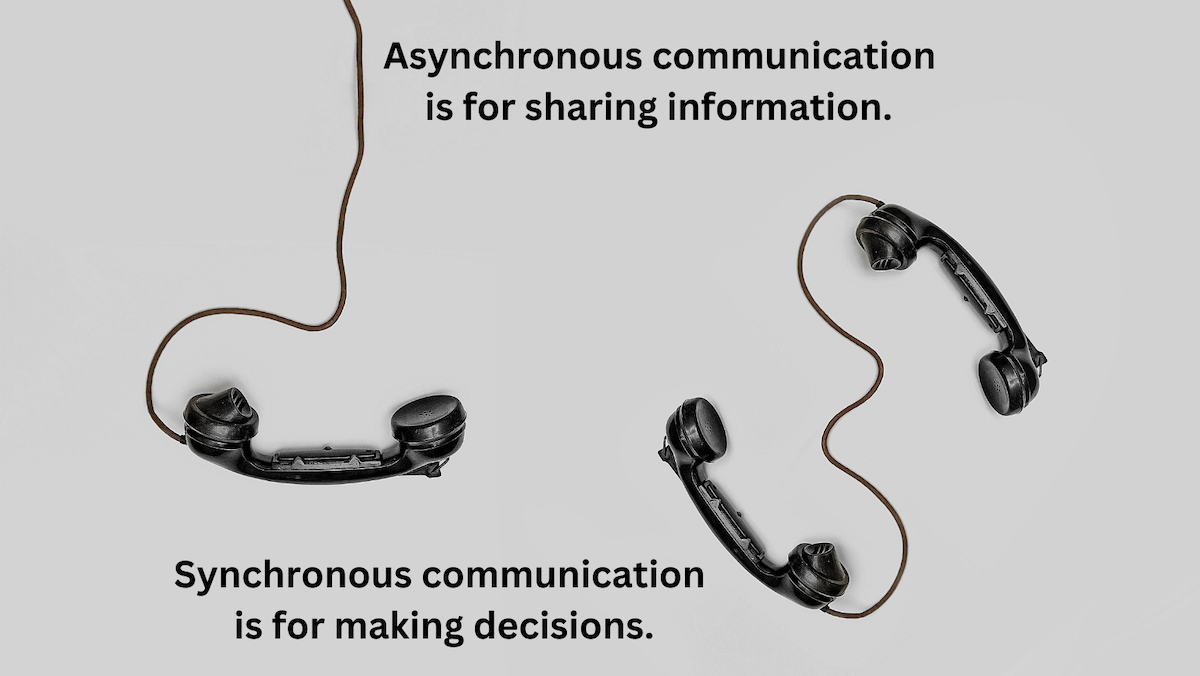
Synchronous communication is for making decisions.
Asynchronous communication is for sharing information.
You know those meetings where someone is simply giving an update or sharing information and others are listening. Yes – the meetings that could have been an email. The “sharing of information” could have been done in advance, reviewed before the meeting, and discussed more if needed.
I’ve worked with remote teams since 2015 and became a full-time “work-from-homer” in 2020. I’ve managed people in 3 different states, a plane ride away. Our conversations and decisions happen via calls, emails, chat messages and in shared documents over several days or even weeks. The rise of remote work has busted the concept of people gathering for meetings and working “at the same time.” Remote work has opened up opportunities for teams to work together in different cities, states and countries. Work can get done, it just looks different now.
 One Kansas Girl