
We’ve been wanting to visit Charleston, SC for a while now. It was the first place were were stationed after we got married more than 25 years ago. This might be the last “family” vacation we take, as the kids are getting older, graduating from college and getting “real jobs.” I thought last year’s San Diego trip might have been the last, so maybe this a bonus trip!
Saturday, January 4 – arrival
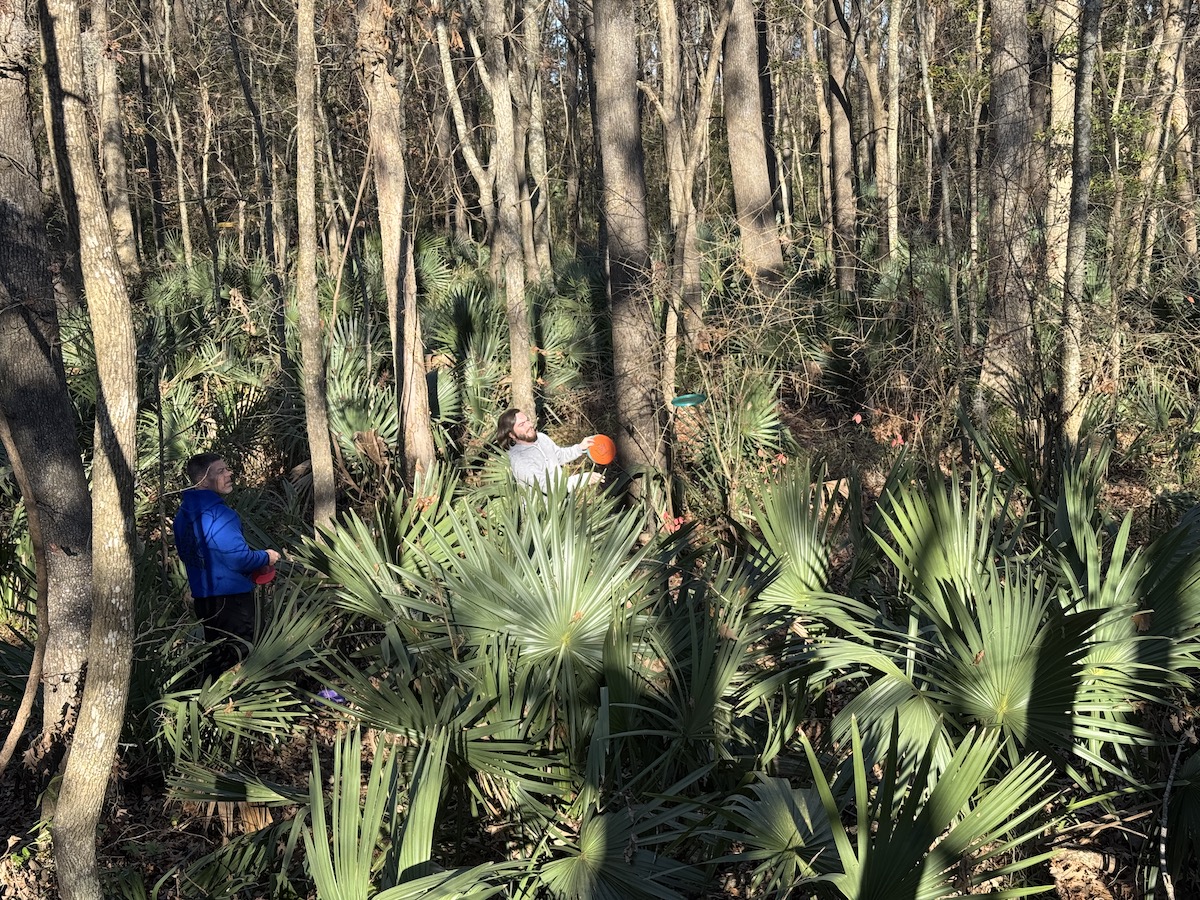
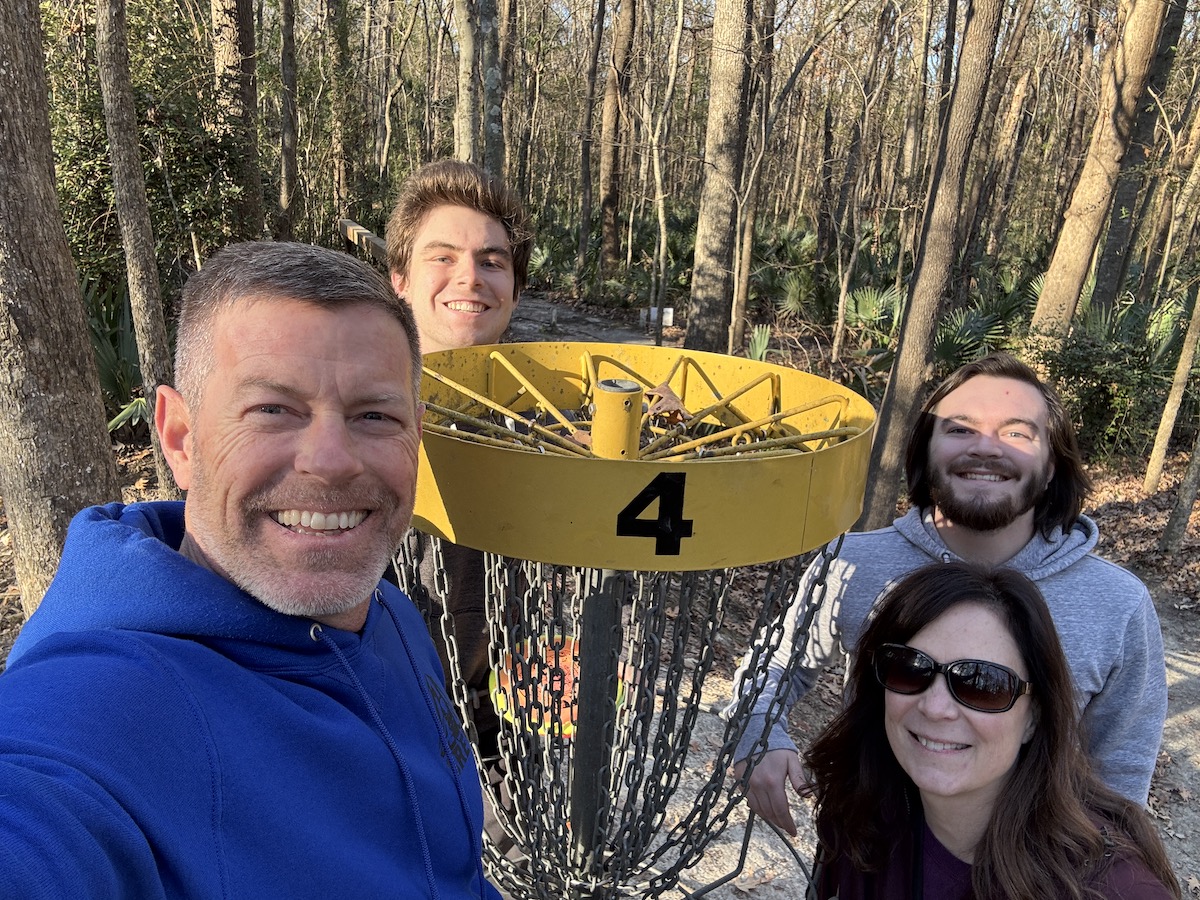
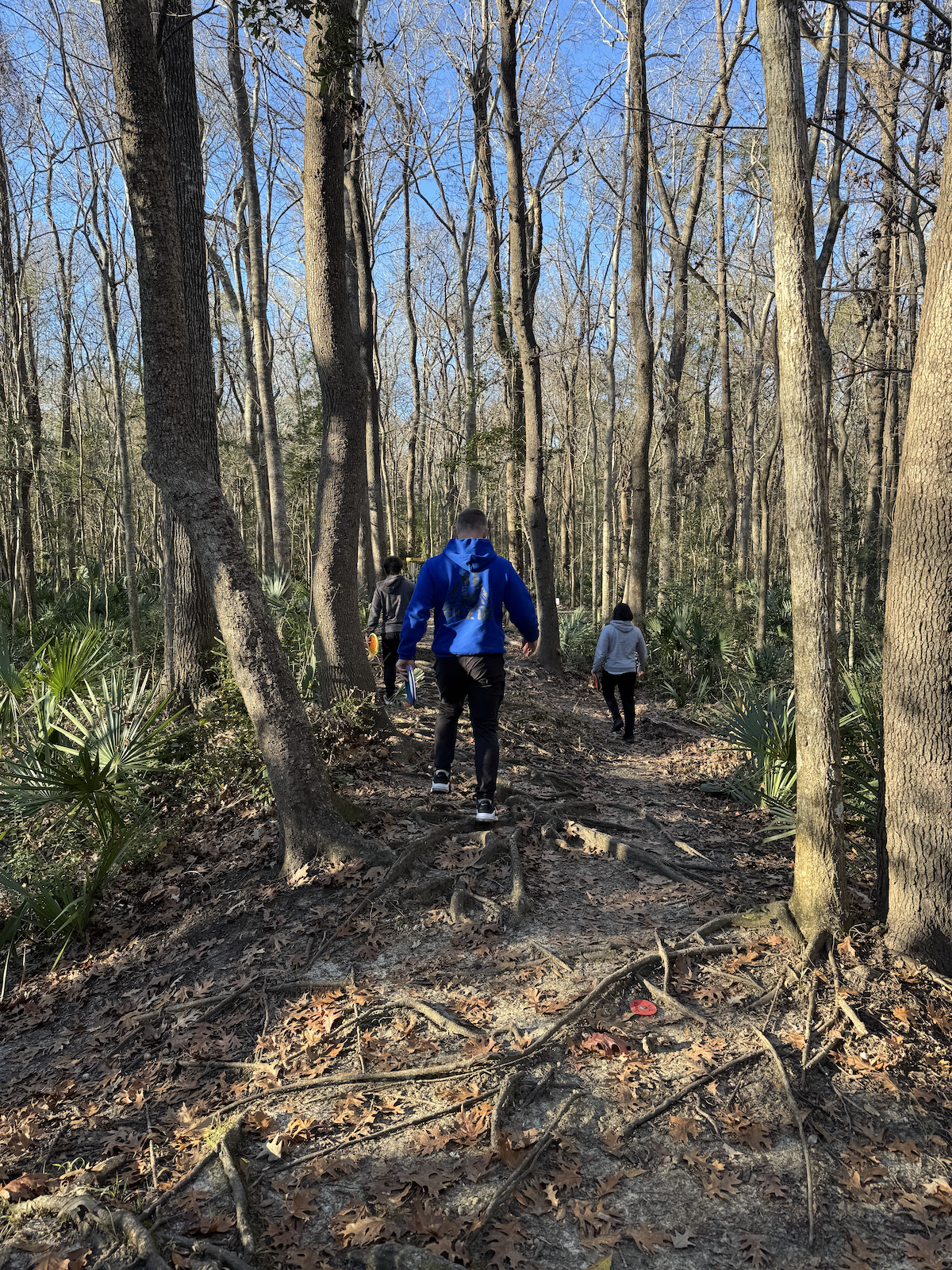
First stop: Fire Swamp Disc Golf Course in West Ashley Park. This was a pretty course through forest and swamp.
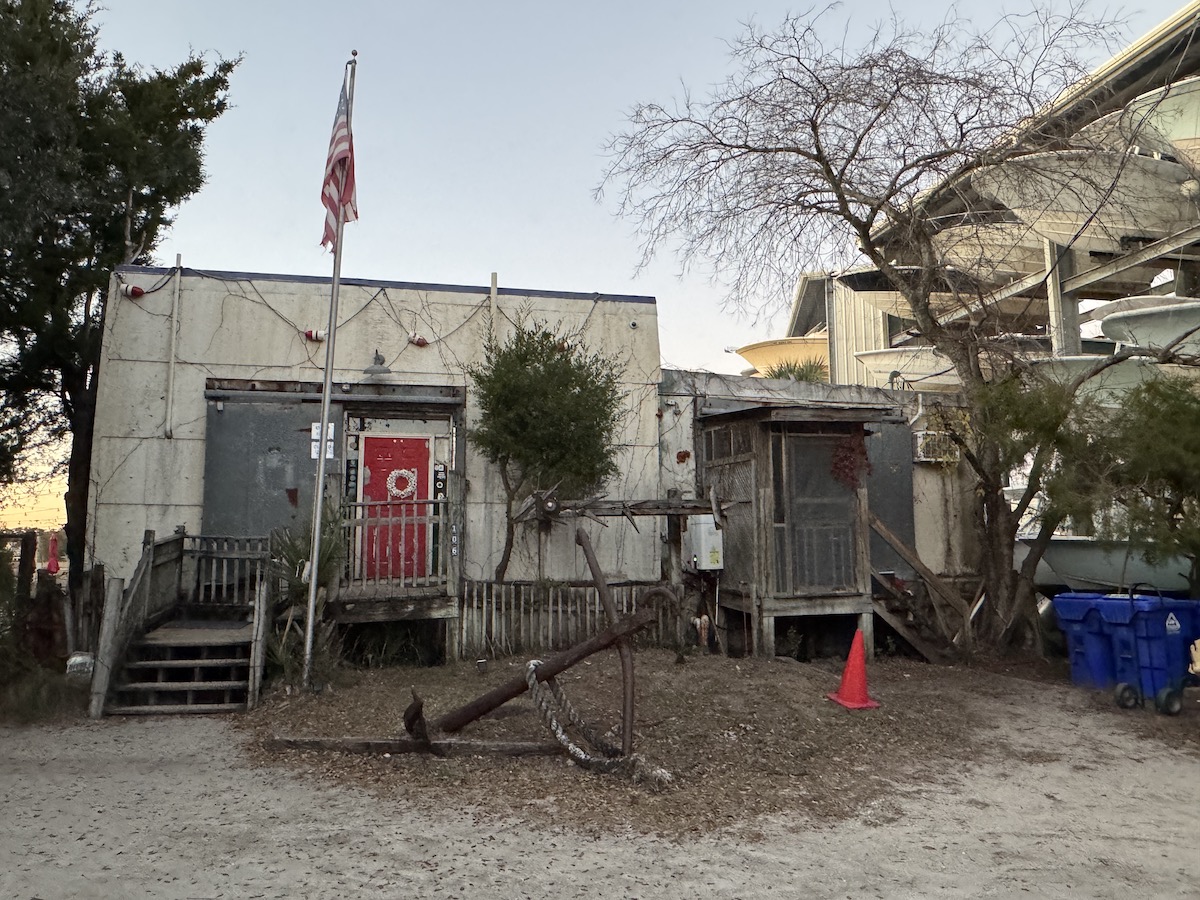
One of things Sc was super excited about was eating at The Wreck of the Richard and Charlene, his favorite restaurant. It’s named after a shrimp boat that was destroyed in 1989 from Hurricane Hugo. To our dismay, it was closed for renovations! We did get a pic of the outside…
We stayed in an Airbnb – a typical Charleston single house, which are typically one room wide, narrow homes with an open porch on the side. This home was converted into apartments. Our place was on the upper floor, had two bedrooms and two baths, living room, full kitchen, small outside porch area, and laundry.

We wondered how old the house was, so we looked it up: built in 1852! It appeared the hallway floor and some of the doorframes were on a slant. After debating whether it was an optical illusion, we used the “level” app on our phone and sure enough – the door frame was slanted about 2 degrees.
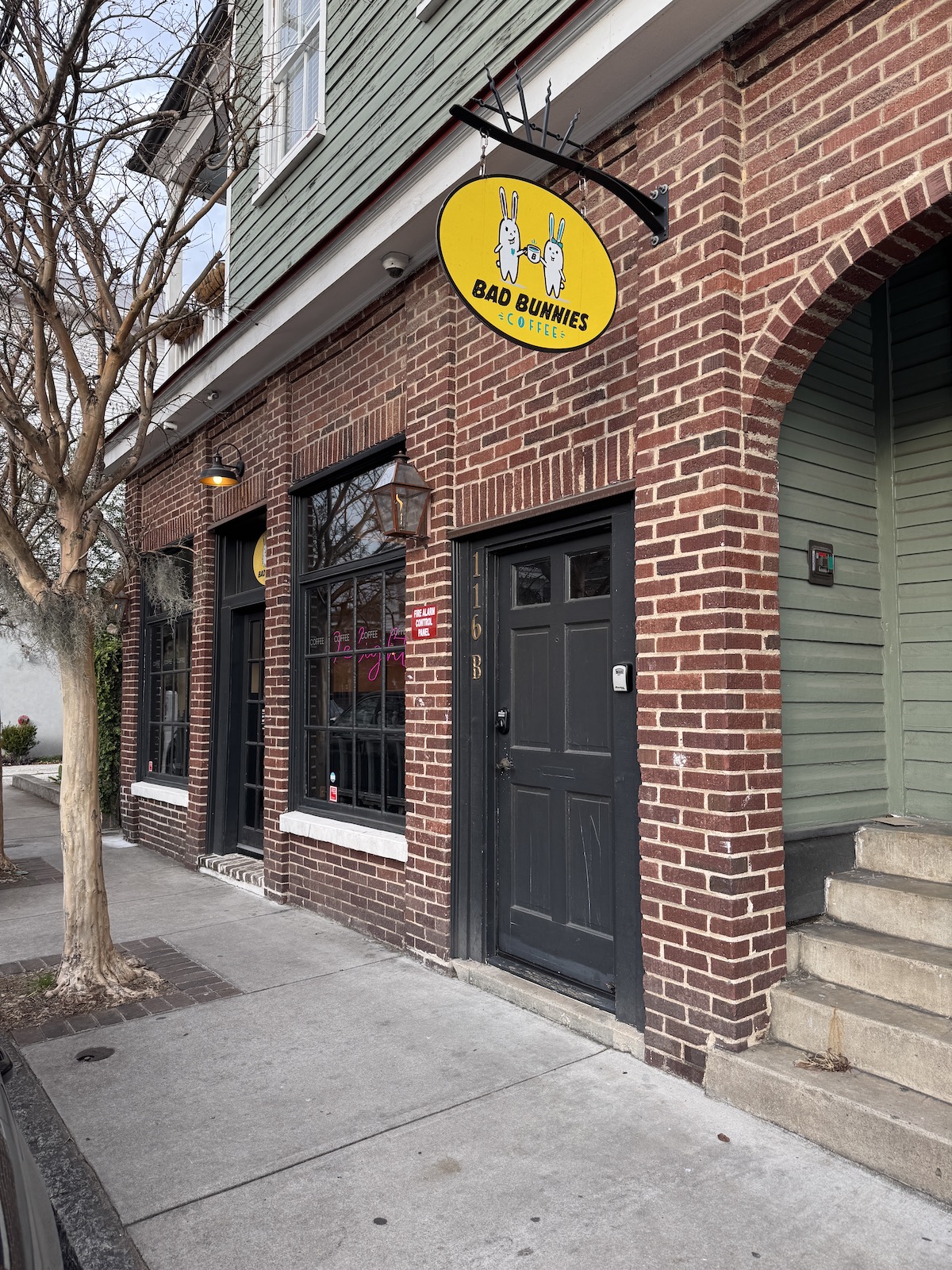
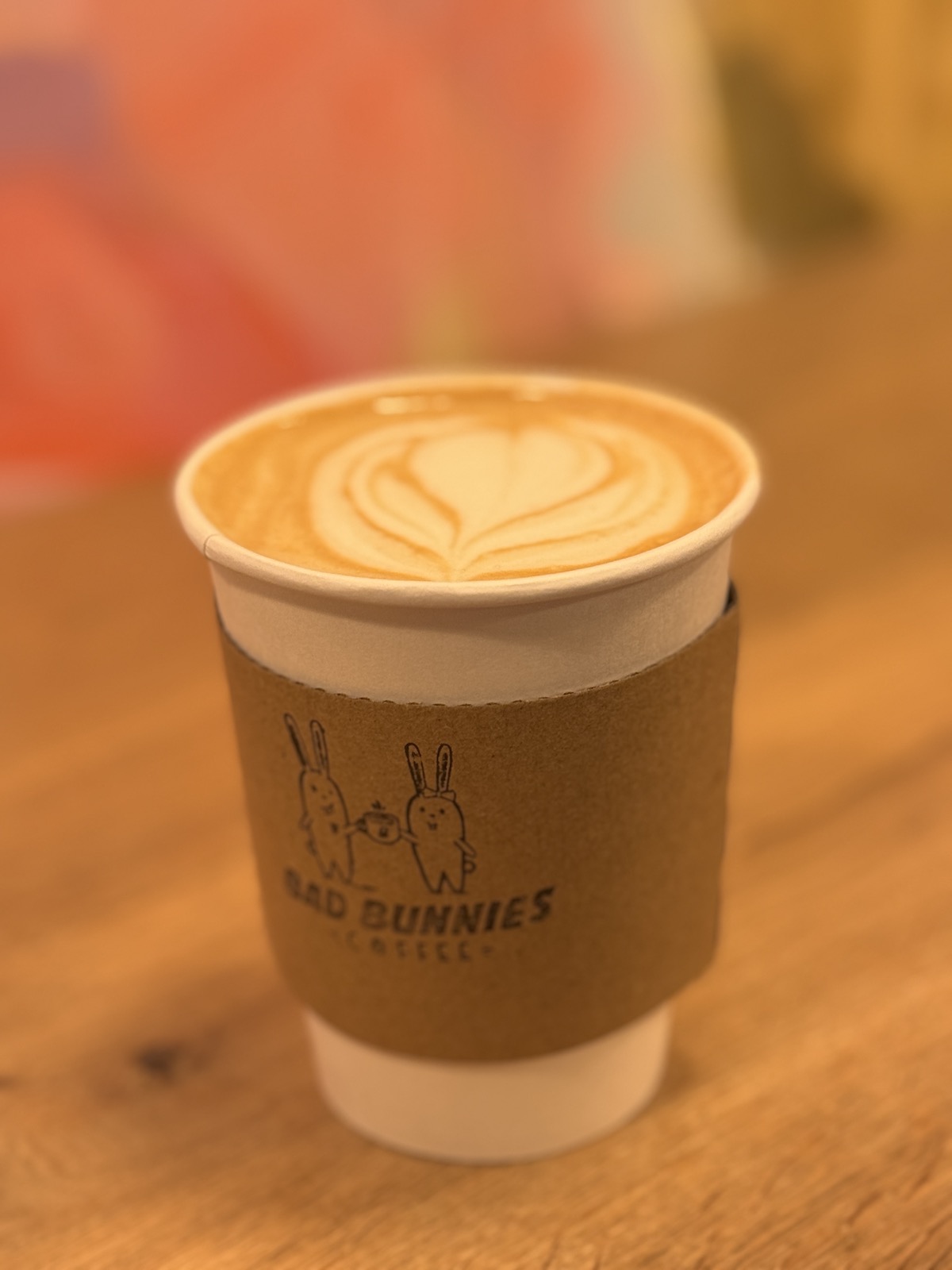
Every morning, I walked to get coffee at a super cute local shop one block from our Airbnb.
Sunday, January 5 – The Battery, Hyman’s Seafood and Fort Sumter tour
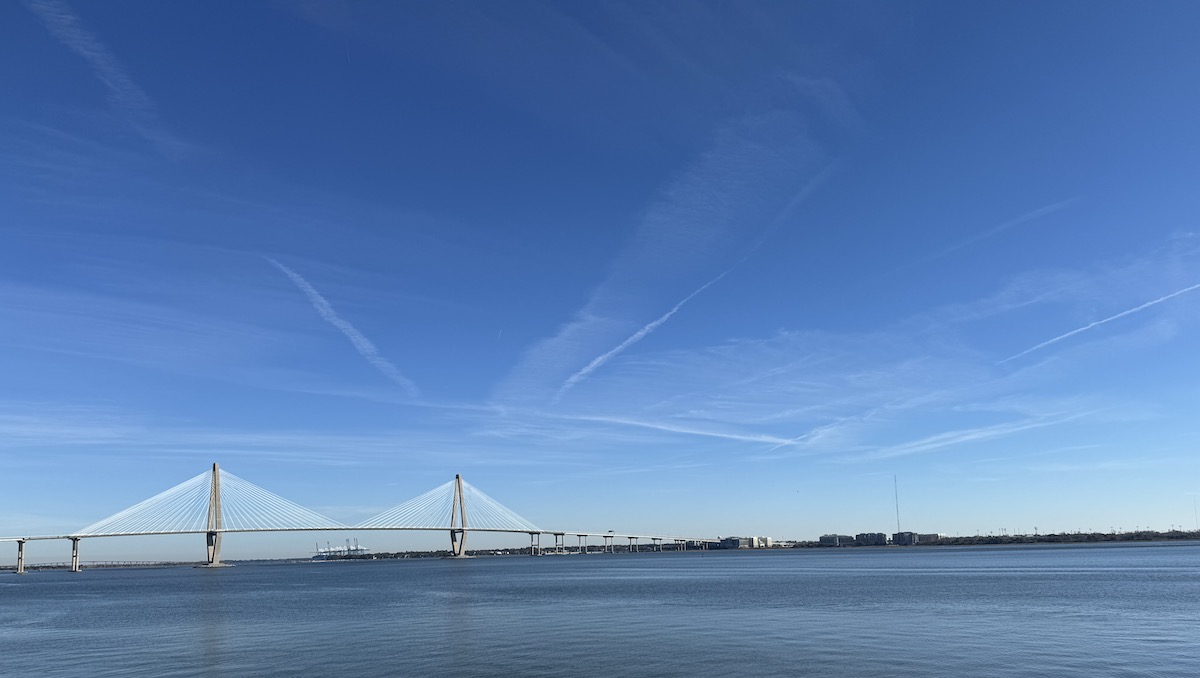
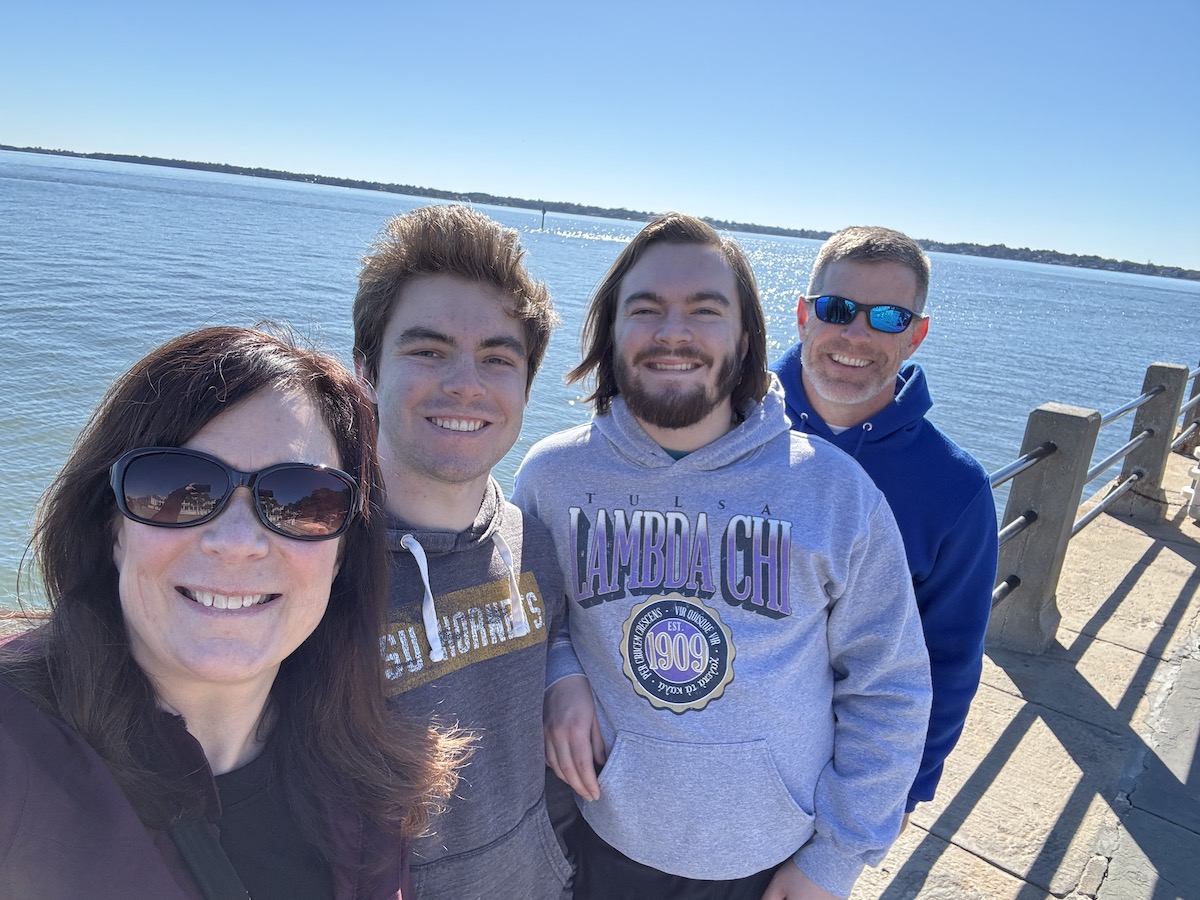
In the morning, we did a self-guided walking tour of downtown Charleston and the Battery. We started out at the Port of Charleston, which has been active since 1670. The bridge in the distance is the Arthur Ravenel Jr. Bridge, which connects Charleston to Mt. Pleasant. When we lived here in the late 90s, two bridges served as this connection: the Grace Memorial and Pearman Bridge, which you can see by visiting the SC Picture Project for photos.
By 1770, Charleston was America’s third busiest port, exporting timber, indigo, furs, leather, and rice. We heard that a famous Chinese leader wanted his rice to be shipped from Charleston. Around the 1850s after the cotton gin was invented, cotton replaced rice as Charleston’s dominant export.
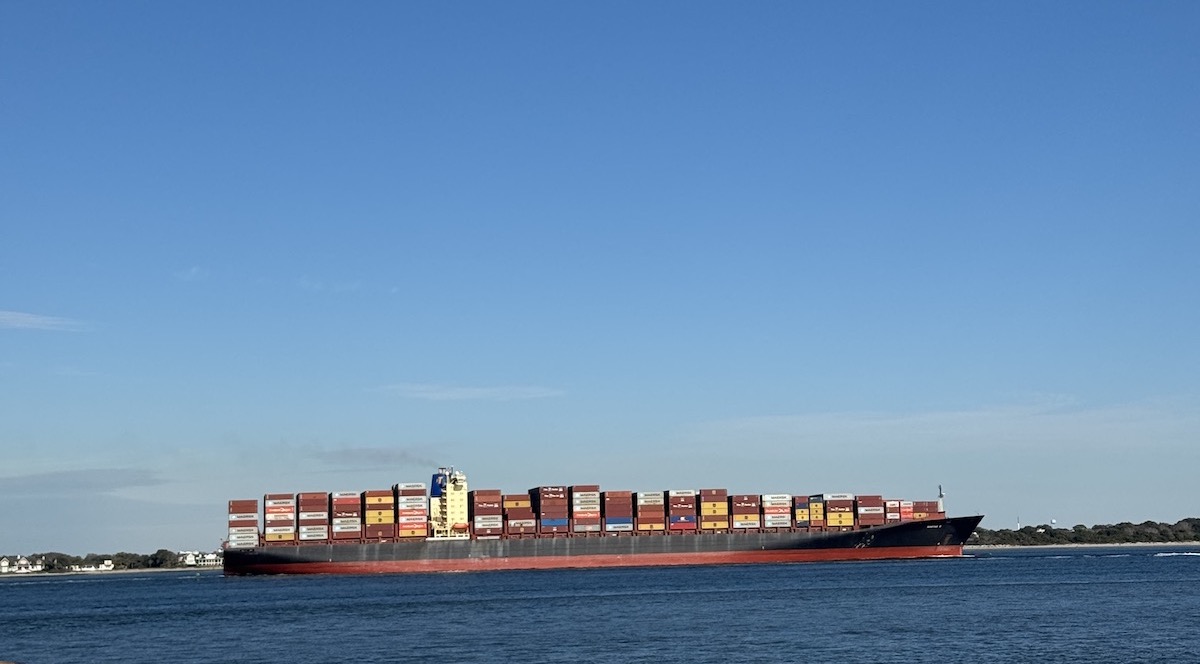
Today, the Port of Charleston is one of the largest ports in the country, and the largest container port along the Southeast and Gulf Coasts. I had forgotten about the large cargo ships that we’d often see in the harbor.
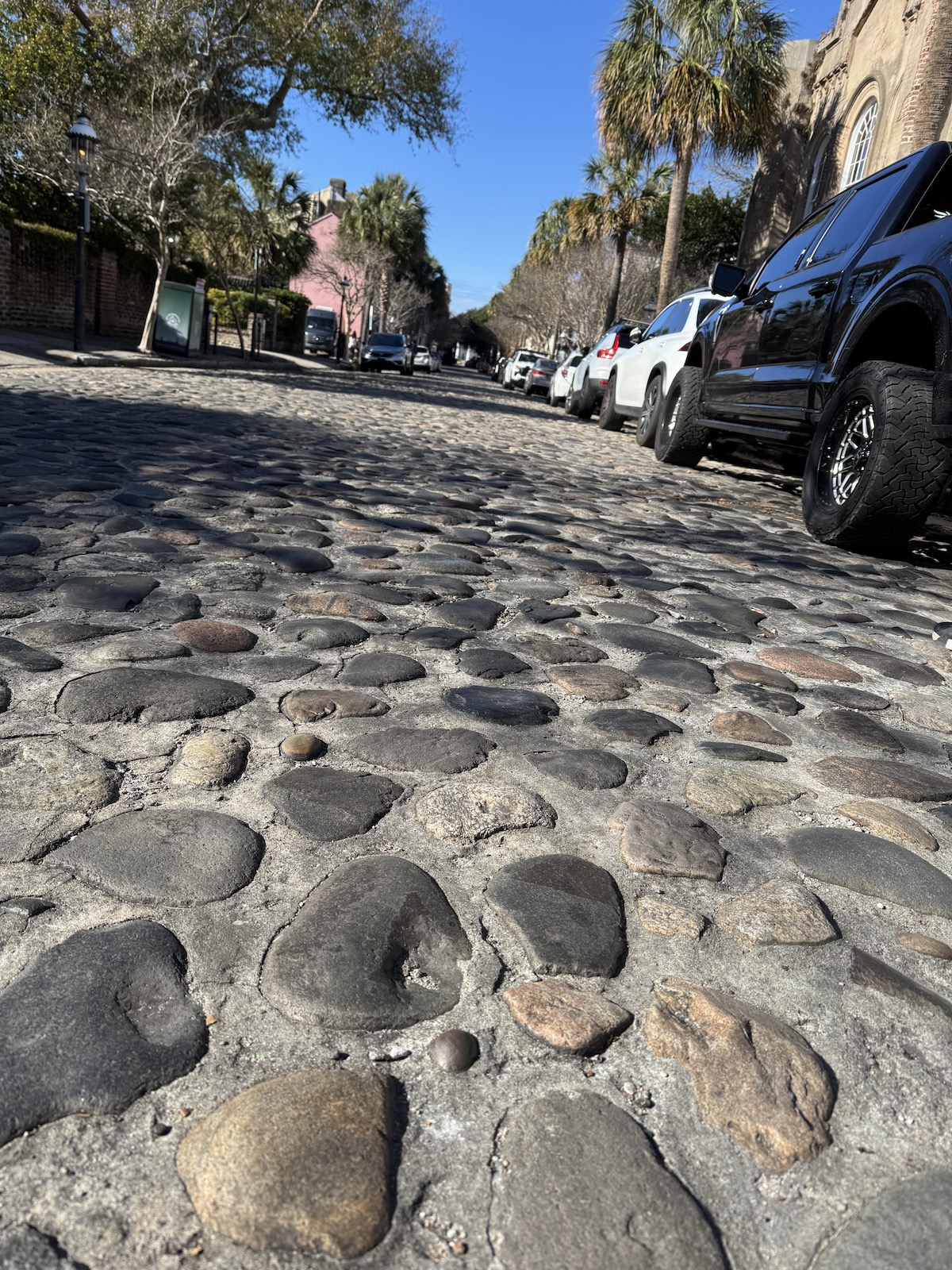
From the port, we walked by the Old Slave Markets and down one of the oldest cobblestone street in the Charleston. Legend has it that Chalmers Street, located in Charleston’s French Quarter, was so bumpy it led to a woman going into labor.
On East Battery, across from White Point Garden Park, looking across Cooper River.
The iconic Pineapple Fountain, one of the most photographed fountains.
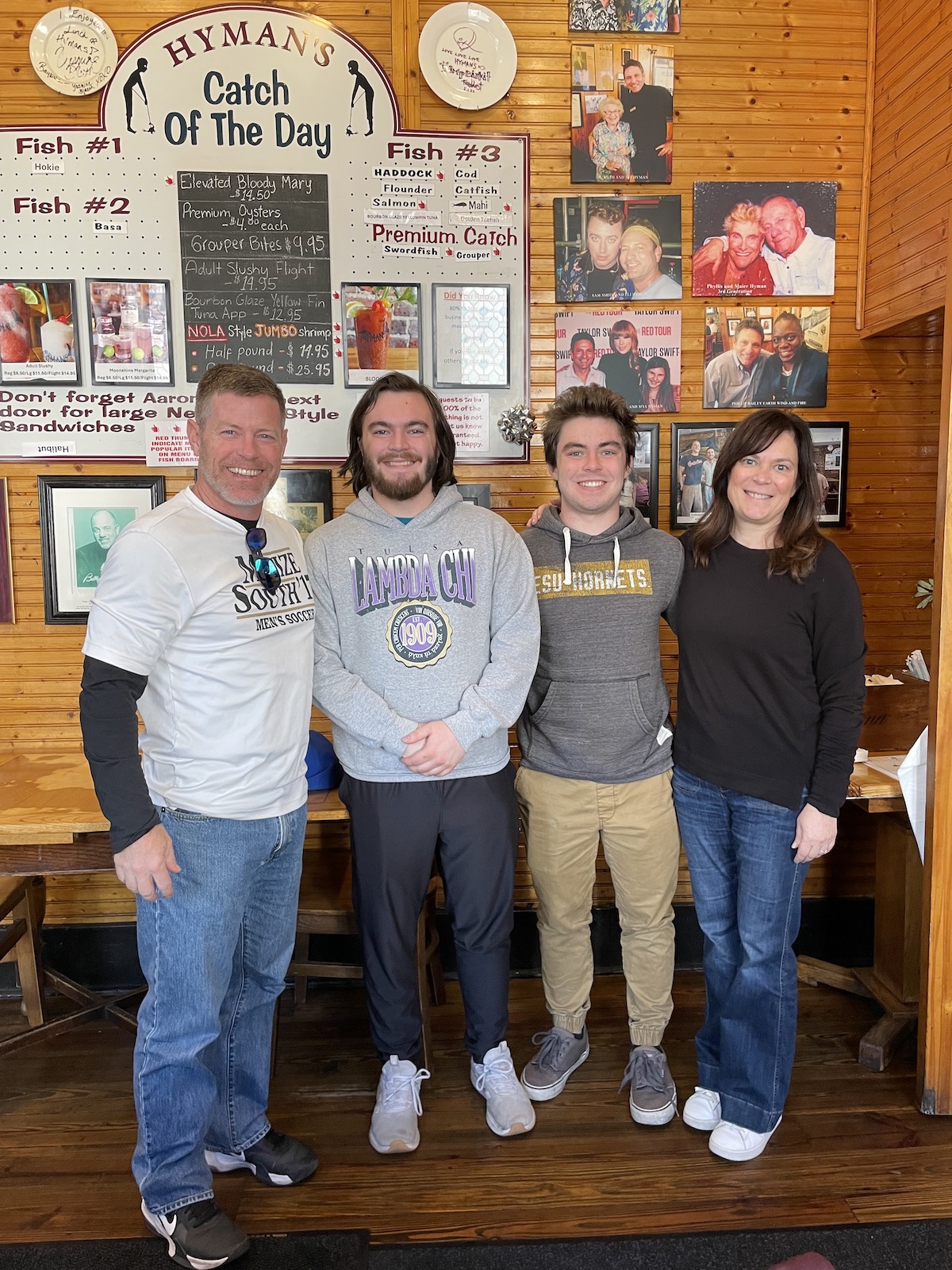
We ate Lunch at Hyman’s Seafood where the boys had their first taste of boiled peanuts. They were not impressed.
Famous Rainbow Row…
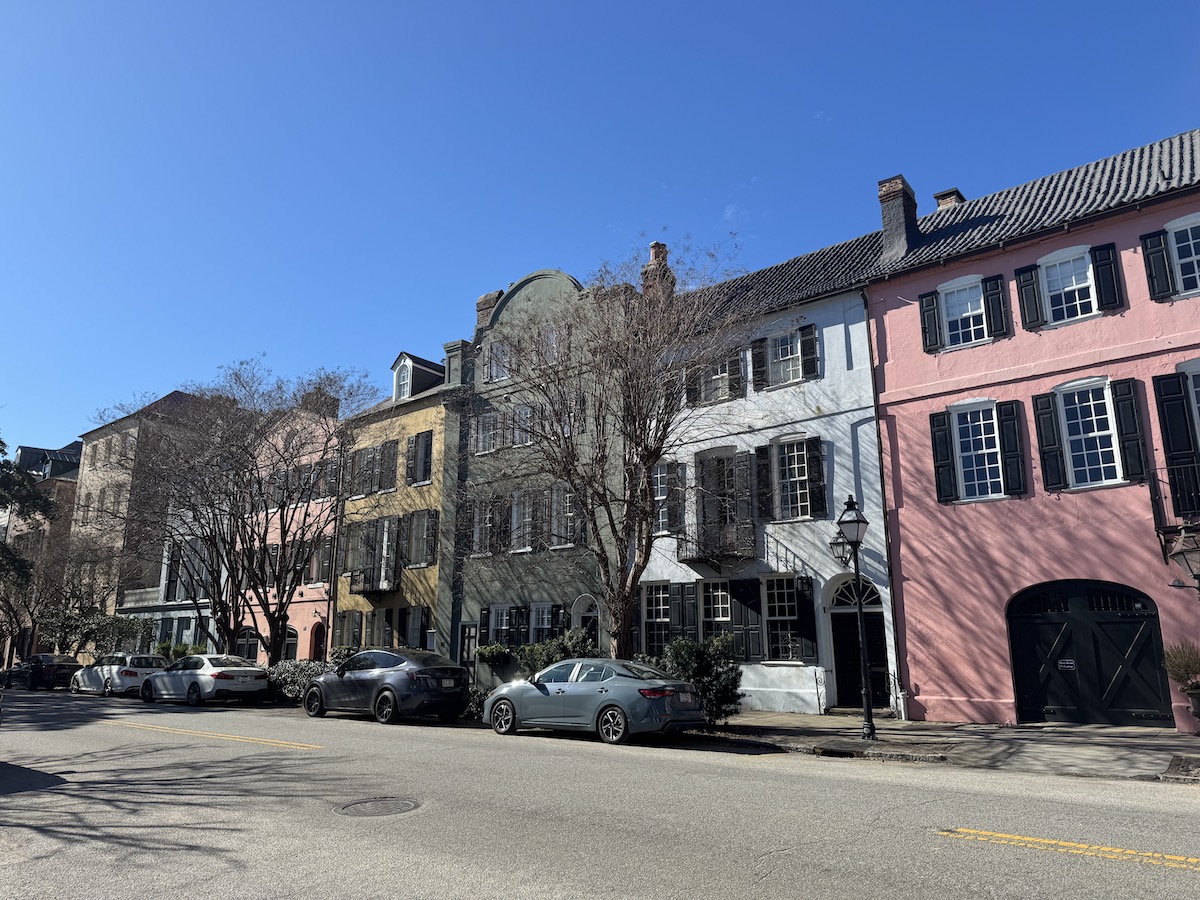
In the 1700s, these homes faced the waterfront dock of East Battery Street. They were used by merchants whose stores were on the ground floor with living quarters above. It wasn’t until the 1930s that these became the iconic easter egg hues of today.
Took the Ferry to Fort Sumter ….
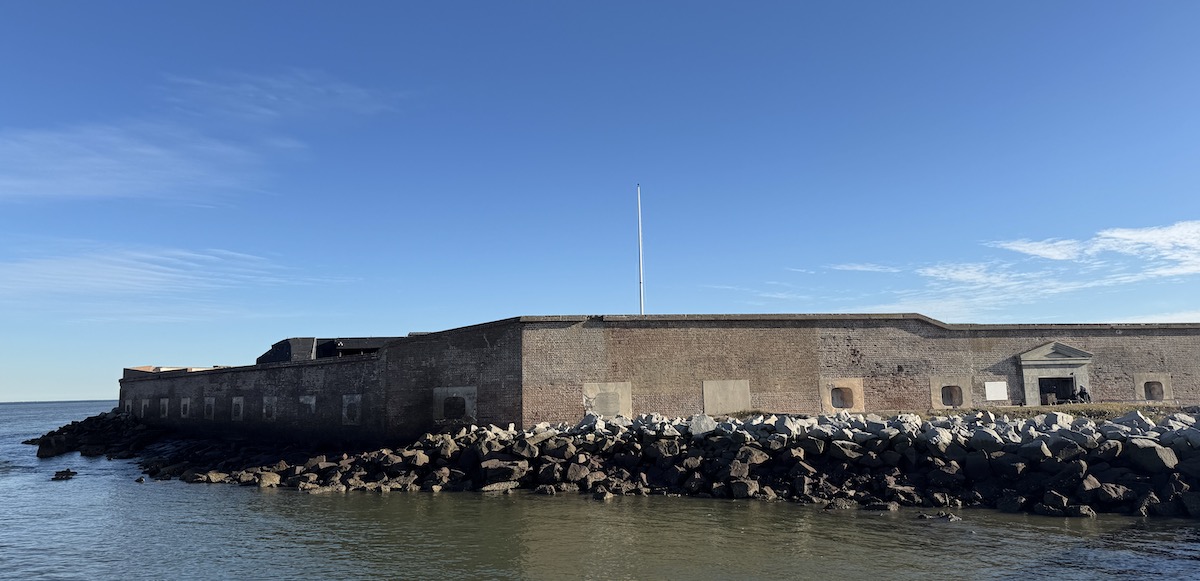
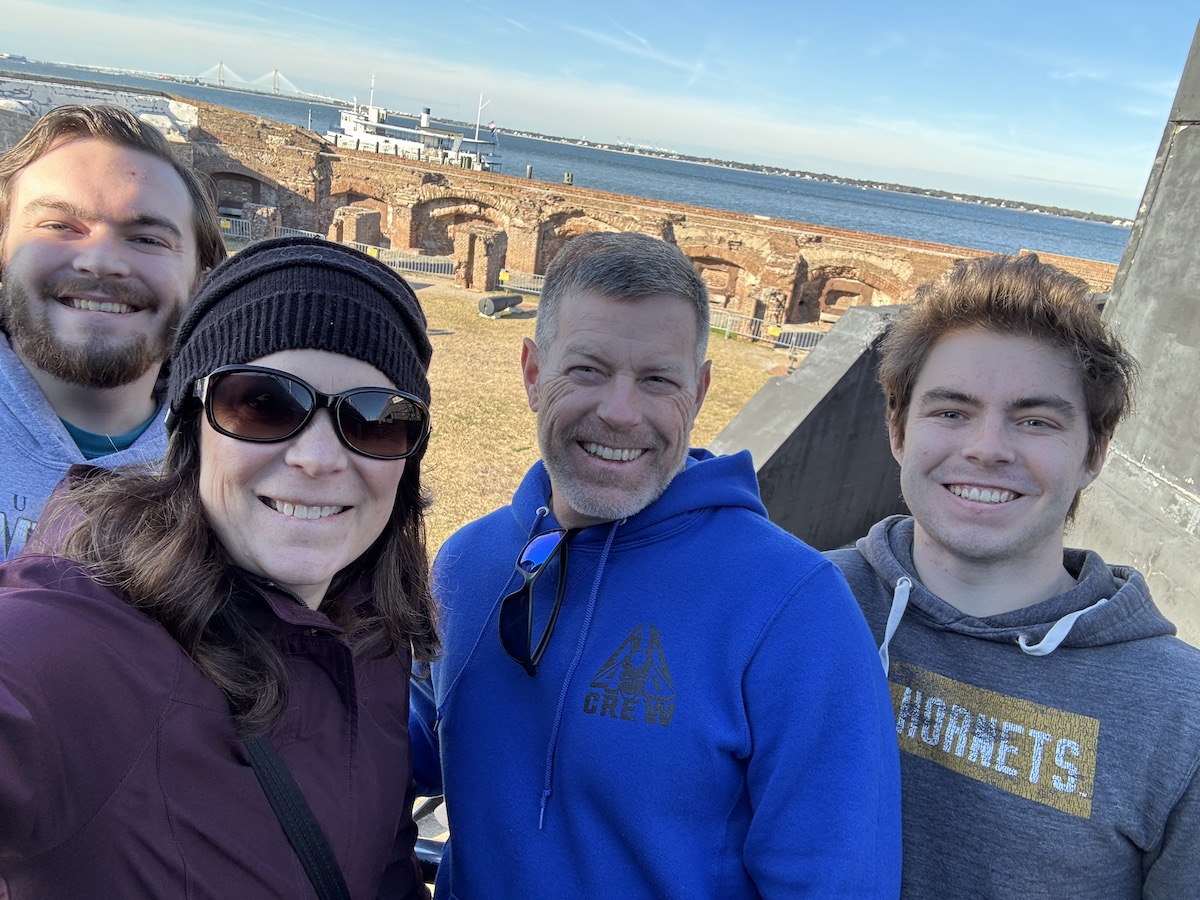
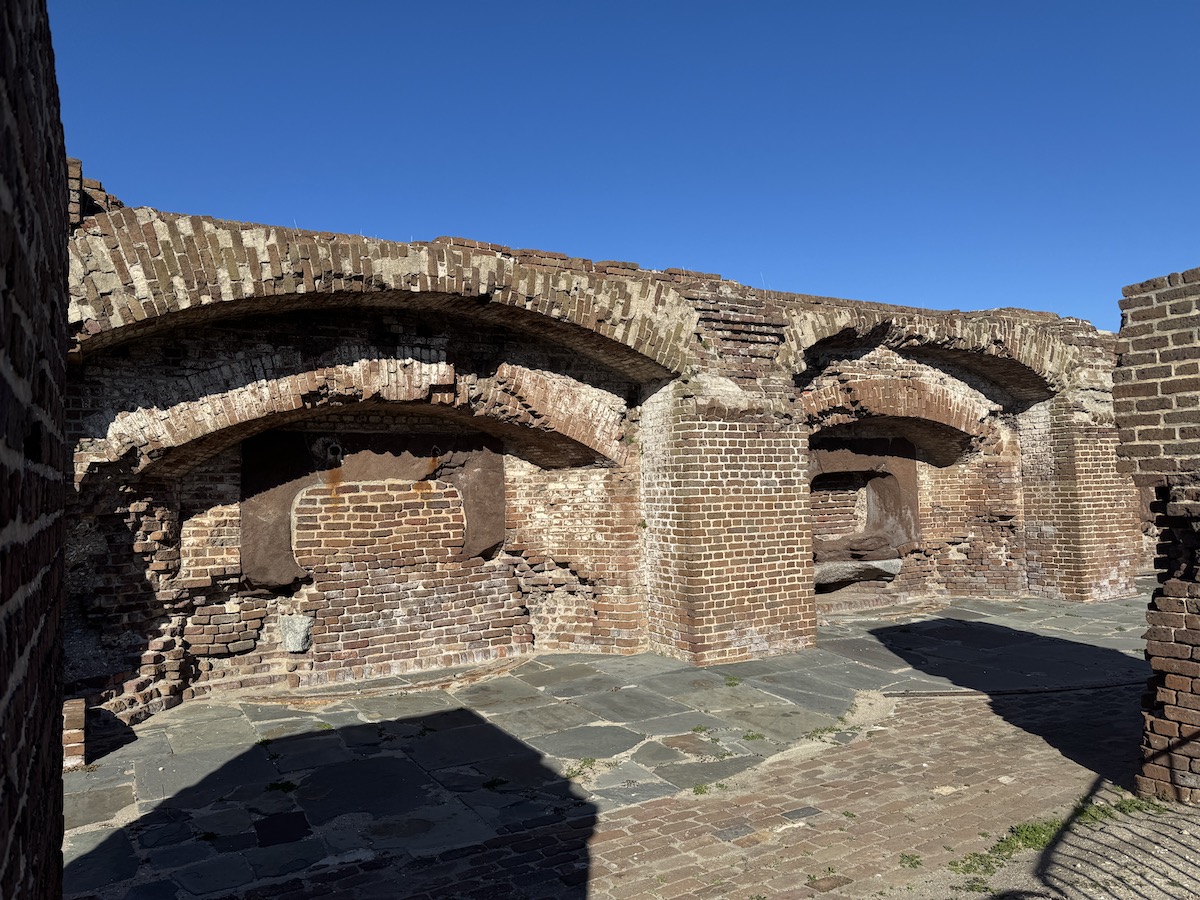
The first shots of the Civil War were fired on Fort Sumter, and it was used for coastal defense until the end of WWII. Today, it’s top two tiers are gone, destroyed by the Civil War, and inside now stands Battery Huger, a huge black concrete artillery emplacement built in 1898. Fort Sumter was built to hold 650 men and 135 guns.
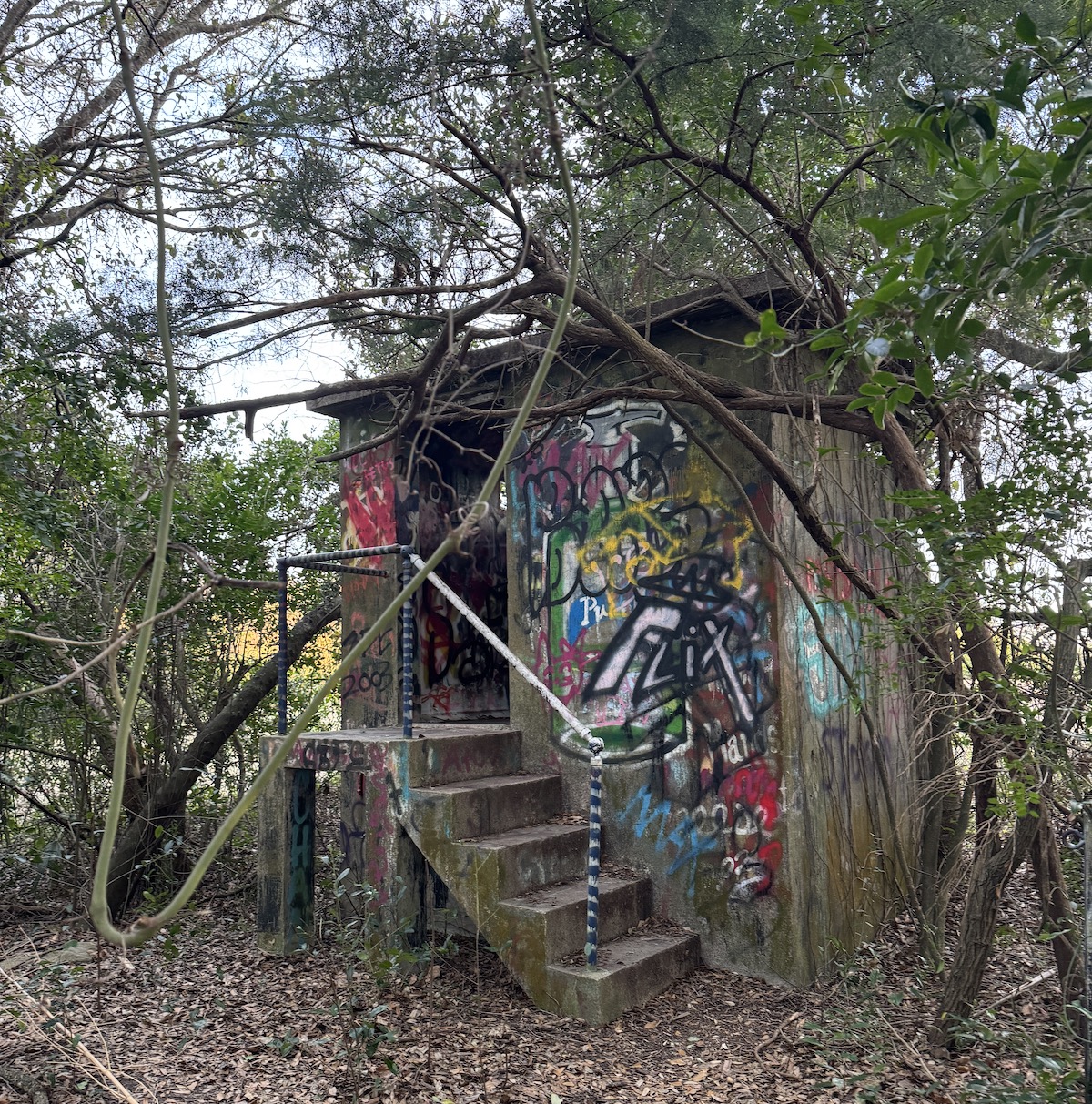
We headed to Sullivan’s Island for dinner. We came across a cool city park, Marshall Stith Park, and while exploring, found an old battery adjacent to the park. According to an article from 2015, “The Mound” is what remains of Battery Capron, built in 1898 to house mortars and ammunition from the Spanish-American War through World War II. It has since been filled in but on top you can see views of the Charleston harbor and coastal waterways.” Some of the lookout towers are still standing, although heavily vandalized.
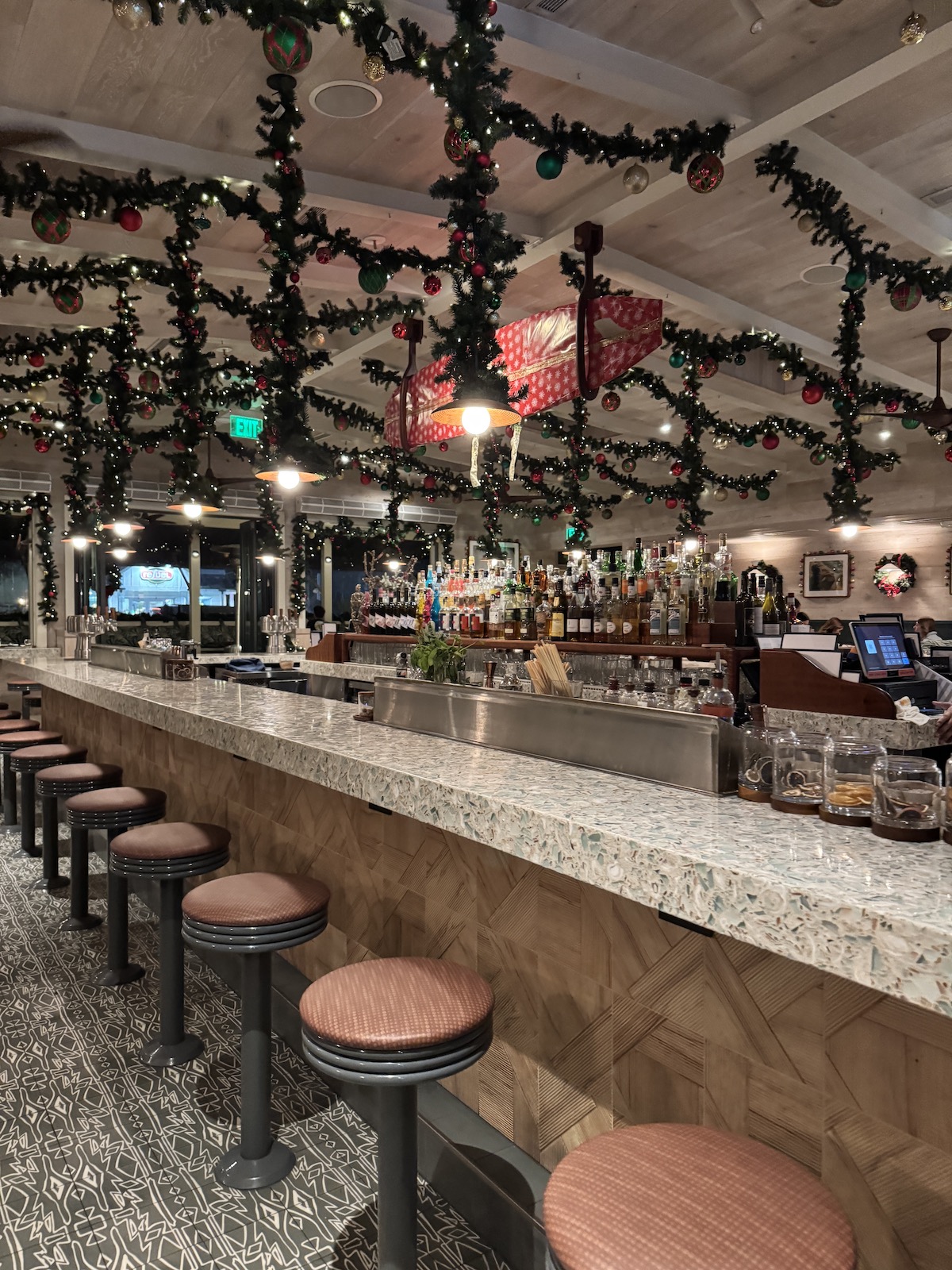
We ate dinner at The Longboard. Many of the restaurants still have their holiday decorations up, which I loved. 🎄
Monday, January 6 – Patriot’s Point
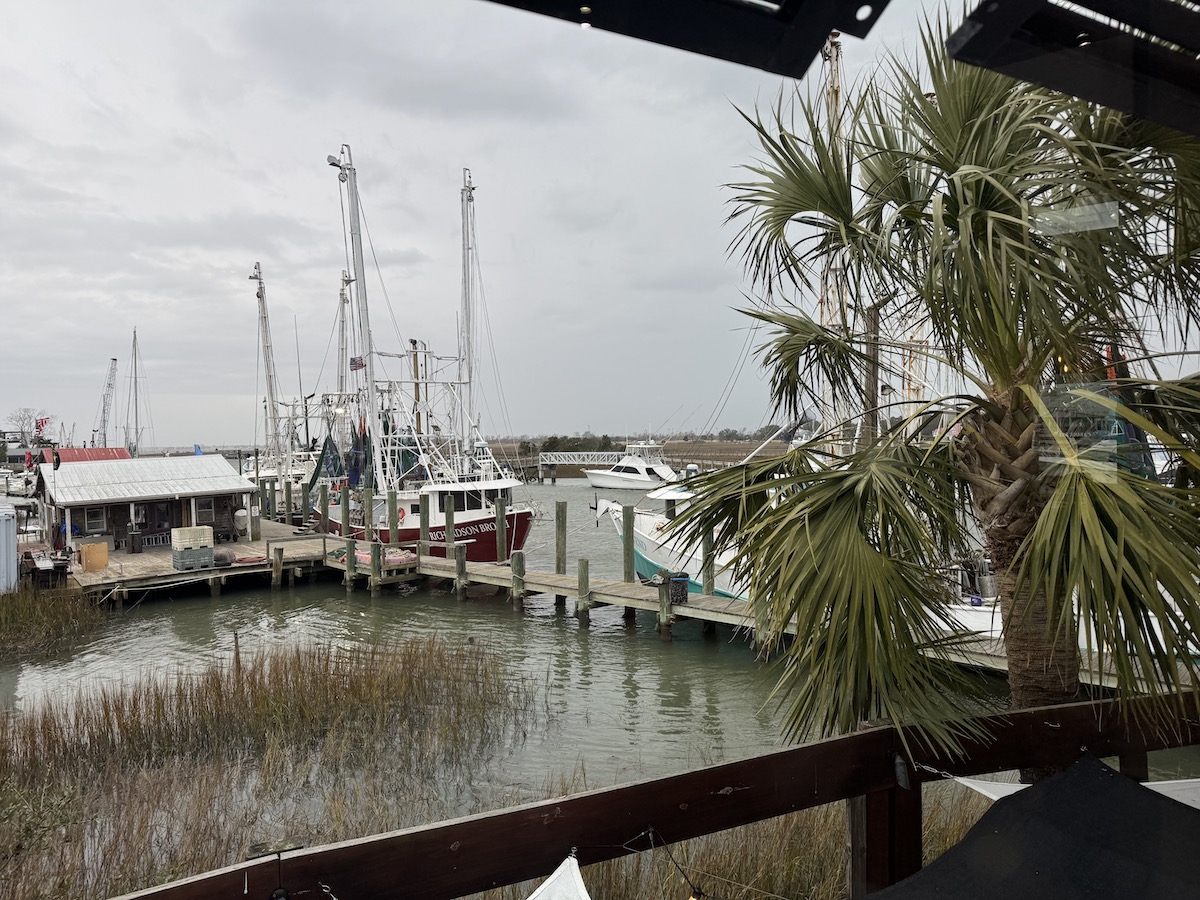
Lunch was at the Saltwalter Cowboy in Shem Creek. The view from our table. #NotInKansas
This is literally the 10th time I’ve been to Patriot’s Point. The first nine were 25 years ago when we lived in Charleston.
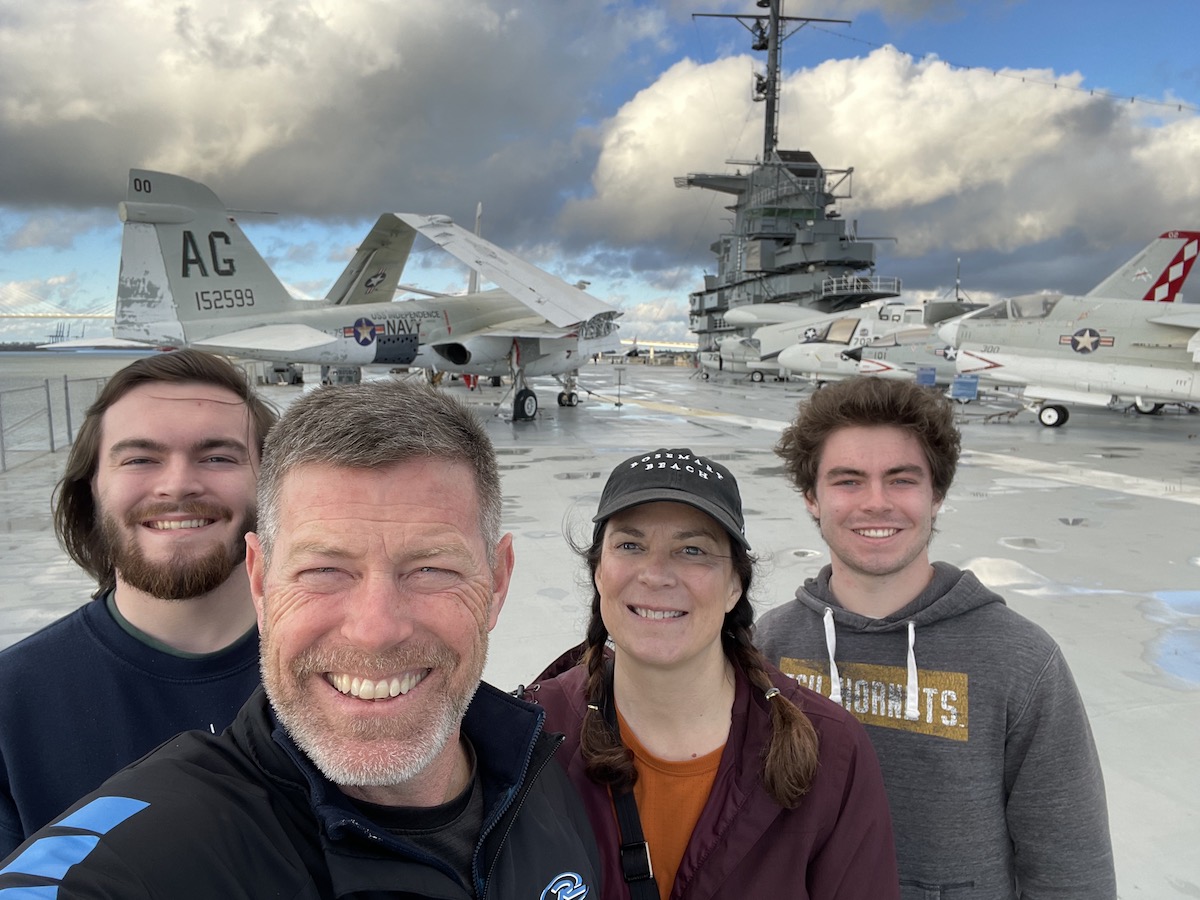
At Patriot’s Point, we toured the WWII aircraft carrier USS Yorktown, the destroyer USS Laffey, and visited the Vietnam Experience.
I hope someone knew what all these dials meant.

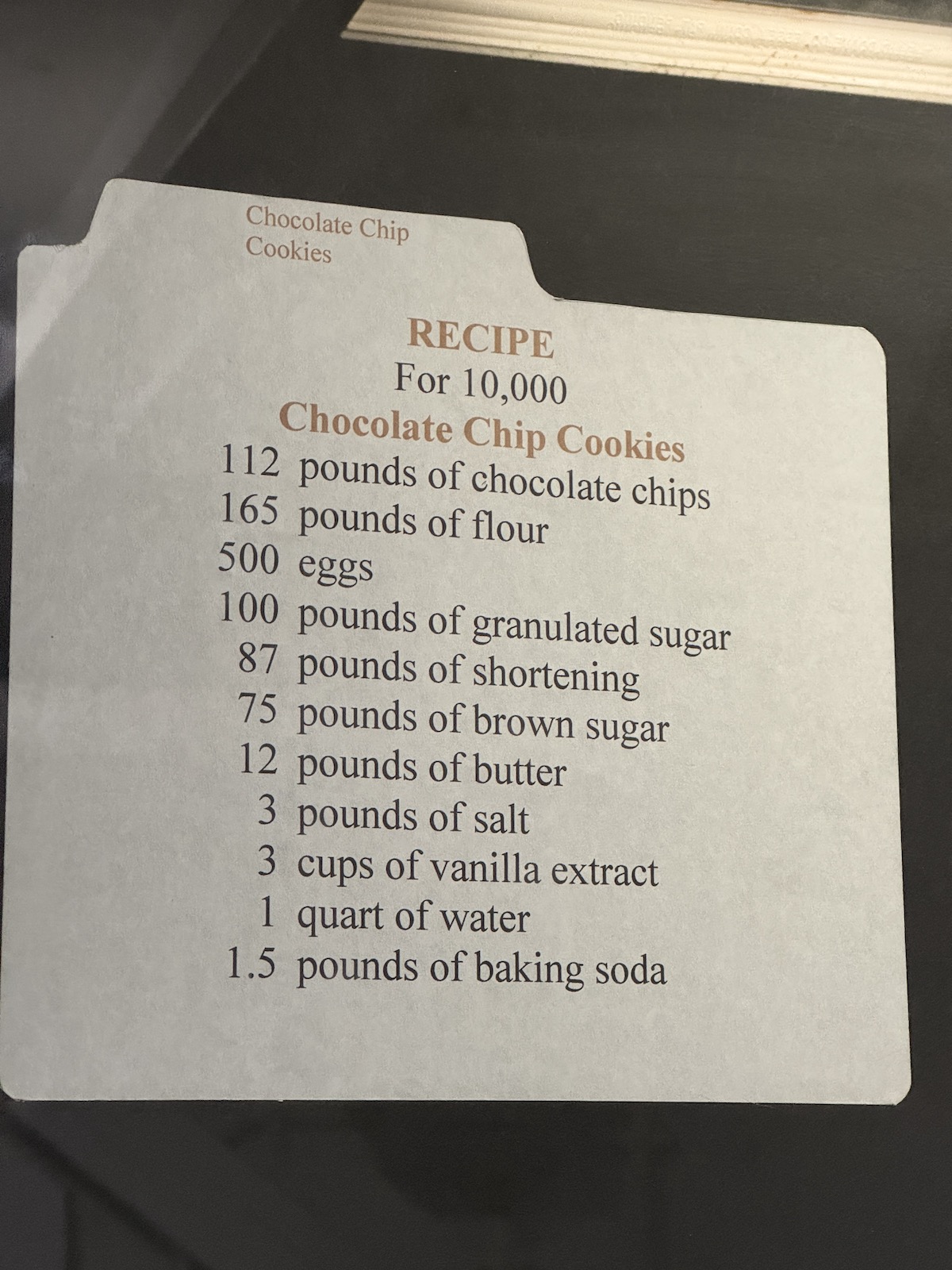
My favorite thing to bake is chocolate chip cookies. But not for 10,000…
Tuesday, January 7 – Boone Hall Plantation
Boone Hall was founded in 1681 when John Boone came to Charleston and established a lucrative plantation and home on the banks of Wampacheone Creek. It’s one of America’s oldest living working farms. We walked the gardens, visited the old slave quarters which explained how they lived and their culture, and took a tractor ride around the gardens.
The current mansion was built in 1936 and we were able to take a tour of the first floor.

Scenes from the 1980s mini series “North and South” and the movie “The Notebook” were filmed here.. These famous oak trees were planted in 1743 by John Boone’s son.

Then on to the beach! It was unusually chilly the few days we were in Charleston.

This was the first time the boys had been to the Atlantic Ocean!
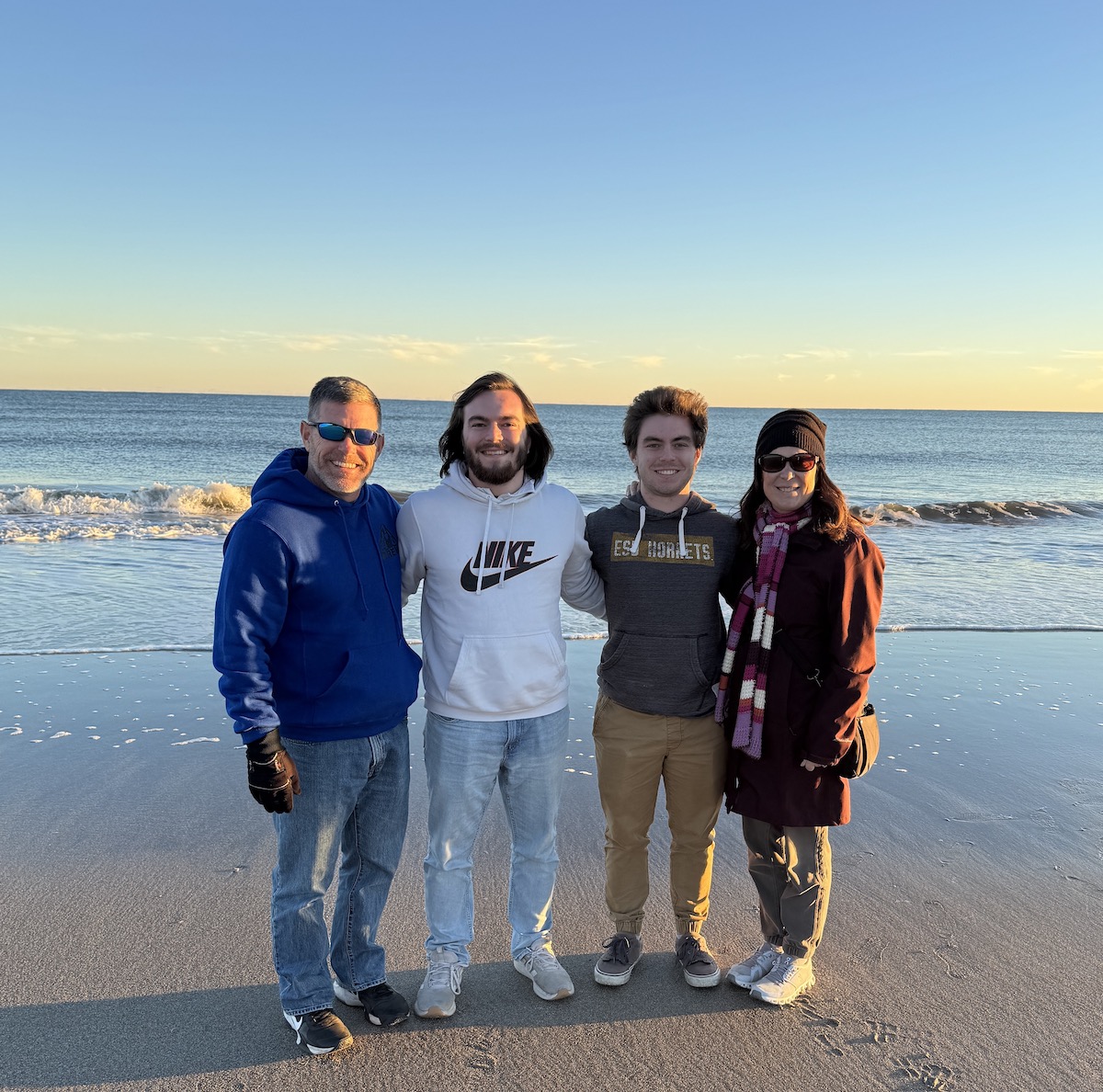
We didn’t stay long, because some didn’t have coats, hats or gloves. We had a little difficulty finding a place to eat, as restaurants near the water were closed because of the cold. We overheard some Charlestonians talking about the unusual weather.
Wednesday, January 8 – The Old Exchange & Provost Dungeon
Our flight left late afternoon, so we had a few hours to sightsee.
The Old Exchange Building in downtown Charleston was completed in 1771 and has been a commercial exchange, custom house, post office, city hall, military headquarters, and museum.
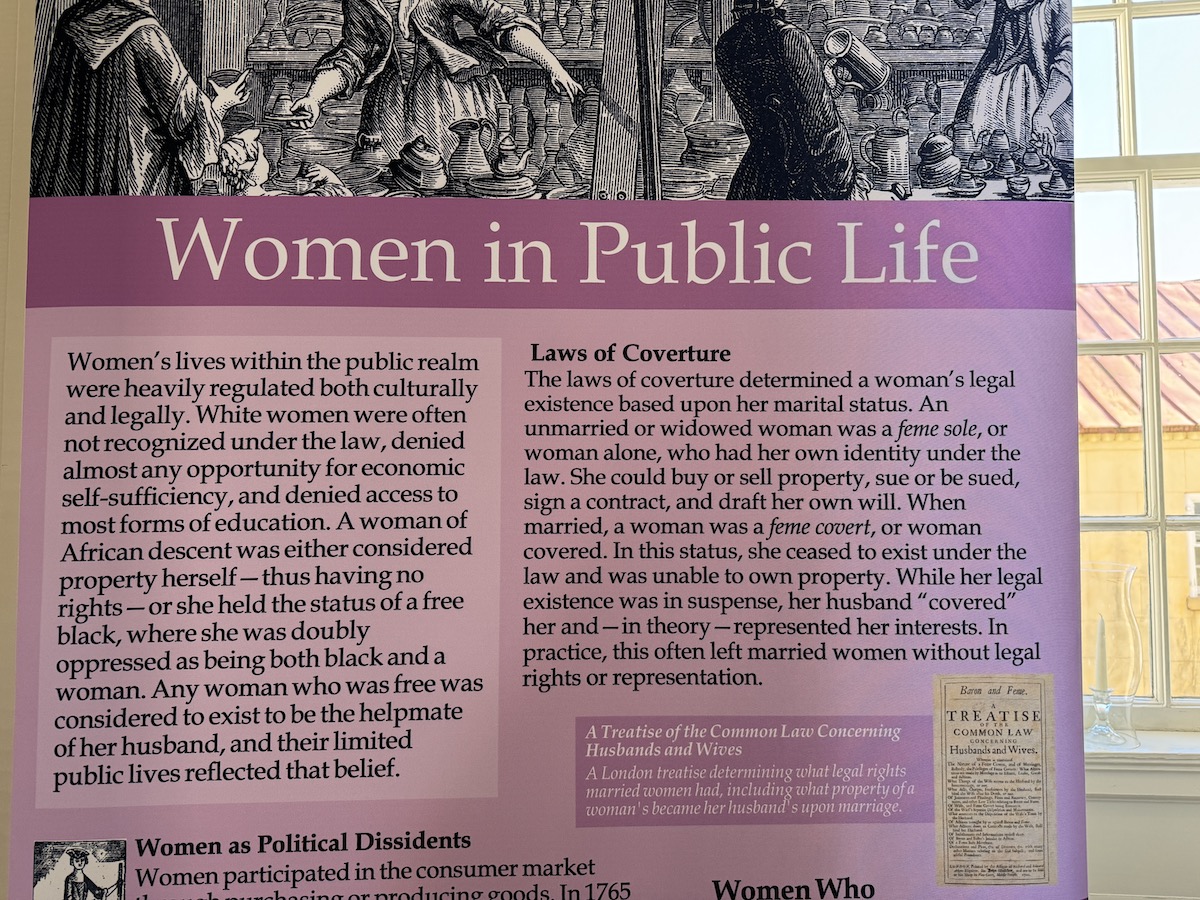
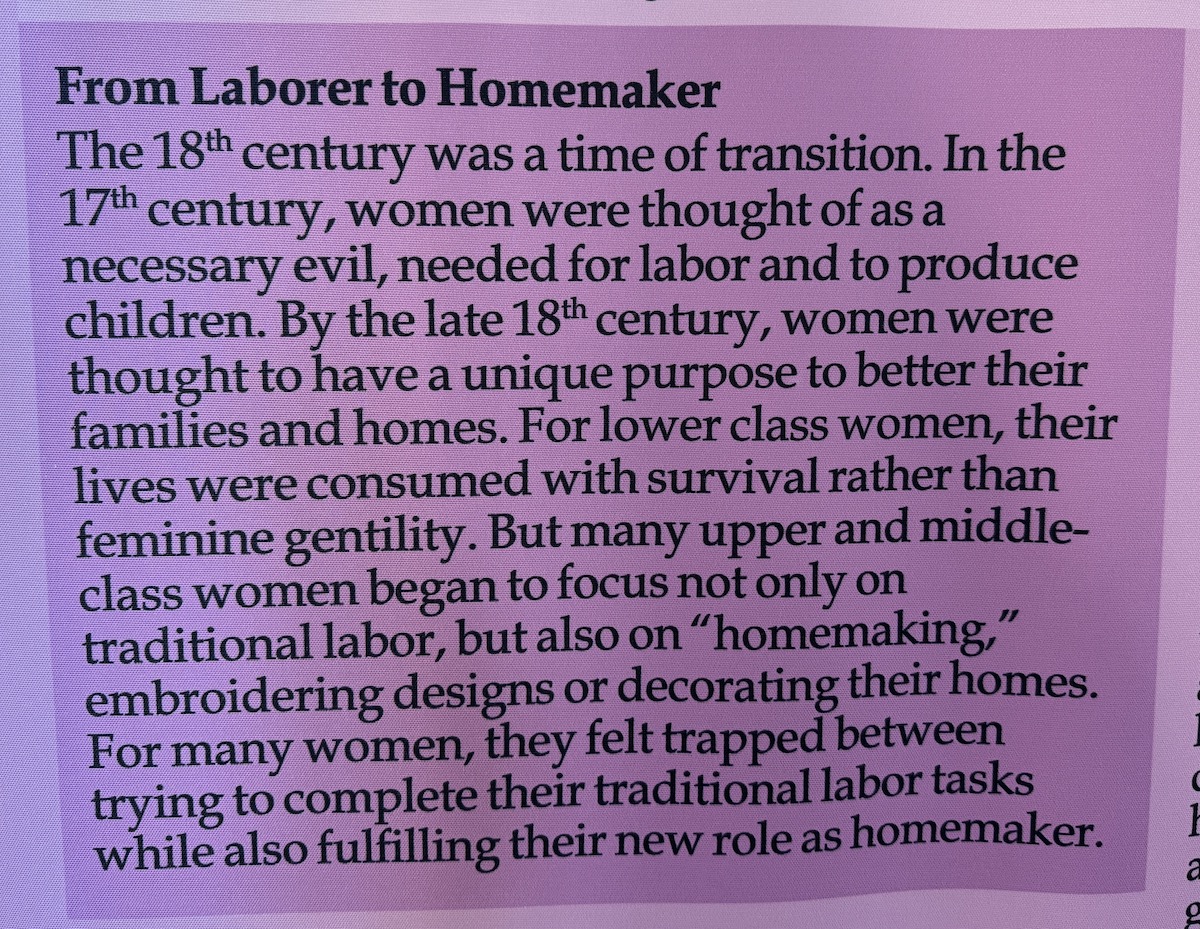
Upstairs is a history of Charleston, including information about the building and society in the 1700s. I was especially intriguied with how women were treated and their (lack of) rights.
The bottom floor was the dungeon. During the American Revolution, British forces used the dungeon to house American prisoners of war, British soldiers, private citizens, and slaves. The dungeon had no light and stone floors. They crowded people in the space, and many died due to the harsh conditions.
One our way to the airport, we drove by our first home – an apartment near the Air Force Base in North Charleston. It’s been remodeled, so were were not able to find our exact unit.
 One Kansas Girl